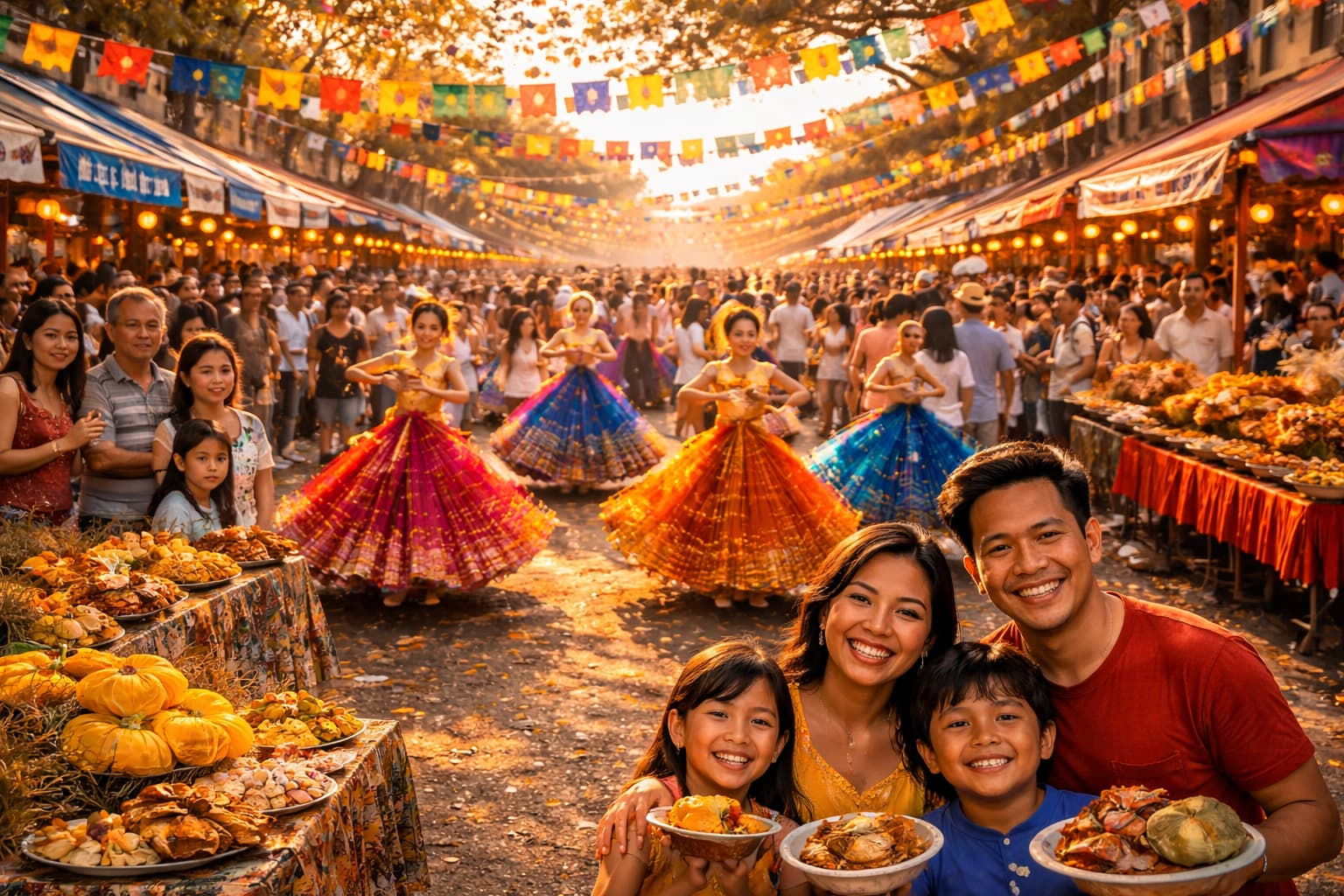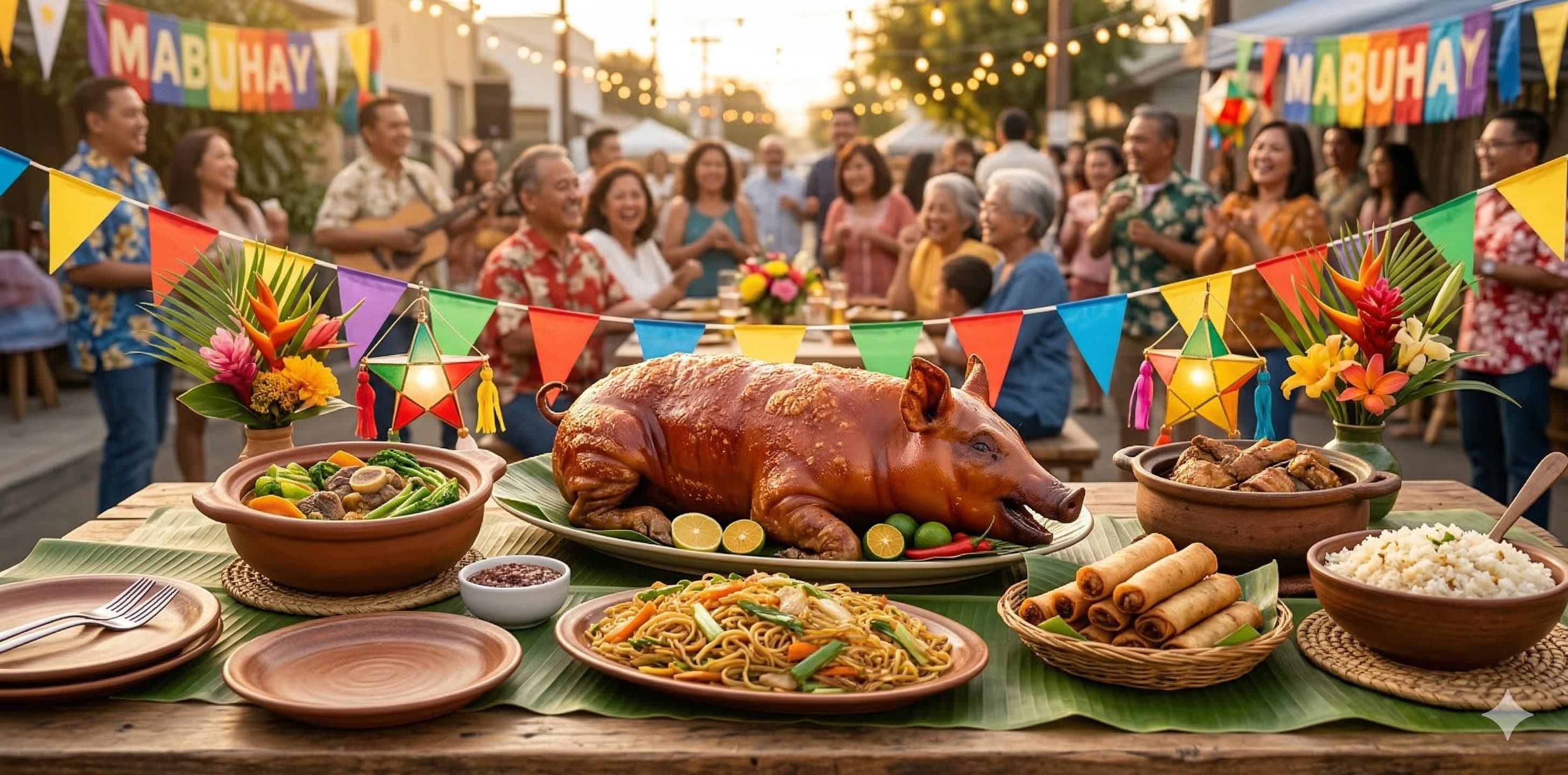
A barrio fiesta is the beating heart of Filipino community life — a gathering rooted in the tradition of Philippine towns celebrating their patron saints, now transplanted to backyards, parks, and community halls across America. If you're thinking about organizing one, you're doing something beautiful for your kababayan. Here's how to make it happen.
Start with your reason to celebrate. Traditional fiestas are tied to a patron saint's feast day — San Pedro, Santa Rosa, Nuestra Señora de Peñafrancia — but Filipino-American fiestas often mark community milestones: a regional association's anniversary, Philippine Independence Day (June 12), Filipino American History Month (October), or simply the joy of gathering. Pick your date and anchor it to meaning.
The lechon is everything. In the Philippines, a fiesta without lechon is almost unthinkable. In America, you have options: hire a professional lechon roaster (many operate out of Filipino butcher shops or catering services), rent a roasting box, or source a whole roasted pig from a Filipino restaurant. If your venue has open space and local ordinances allow it, an open-pit roast is an unforgettable centerpiece. Budget ₱-style: one pig feeds roughly 100 people.
Plan your program around the community. A traditional fiesta program includes: opening prayers and a blessing, a parade of association officers and community leaders, traditional Filipino games (sack races, sack-of-coins toss, pabitin — the hanging bamboo grid of prizes that children jump for), a cultural show with folk dances and OPM performances, and a communal meal. Let the community contribute — invite local dance troupes, student groups, and musicians.
Food stalls are the lifeblood of a barrio fiesta. Organize community members or local vendors to man booths serving goto (rice porridge), pancit, lumpia, barbecue, halo-halo, and more. Charge nominal prices to offset costs, or run it potluck-style with each family contributing a dish. A raffle with donated prizes from local businesses is a time-honored fiesta fundraiser.
Practical logistics to lock down early: venue permit (for parks or public spaces, apply 6–8 weeks ahead), liability insurance (required at most venues, check with your regional association), power access for speakers and food equipment, tables and chairs (rental companies or community loans), and a cleanup crew. Filipino community organizations are remarkably skilled at pulling these together on modest budgets.
Promote your fiesta the FilAm way: flyers at Filipino stores and churches, posts in Facebook groups for your city's Filipino community, word of mouth at Sunday Mass and basketball leagues, and of course — submit your event to FilipinoEventsNearMe.org so the whole community can find it. List it 4–6 weeks before the date for maximum visibility.
The most important ingredient is community participation. A barrio fiesta is not a spectator event — it's a collective creation. Assign committees: food, program, decorations, logistics, children's activities. The more people feel ownership, the more magnificent the fiesta becomes. Maligayang Pagdiriwang!