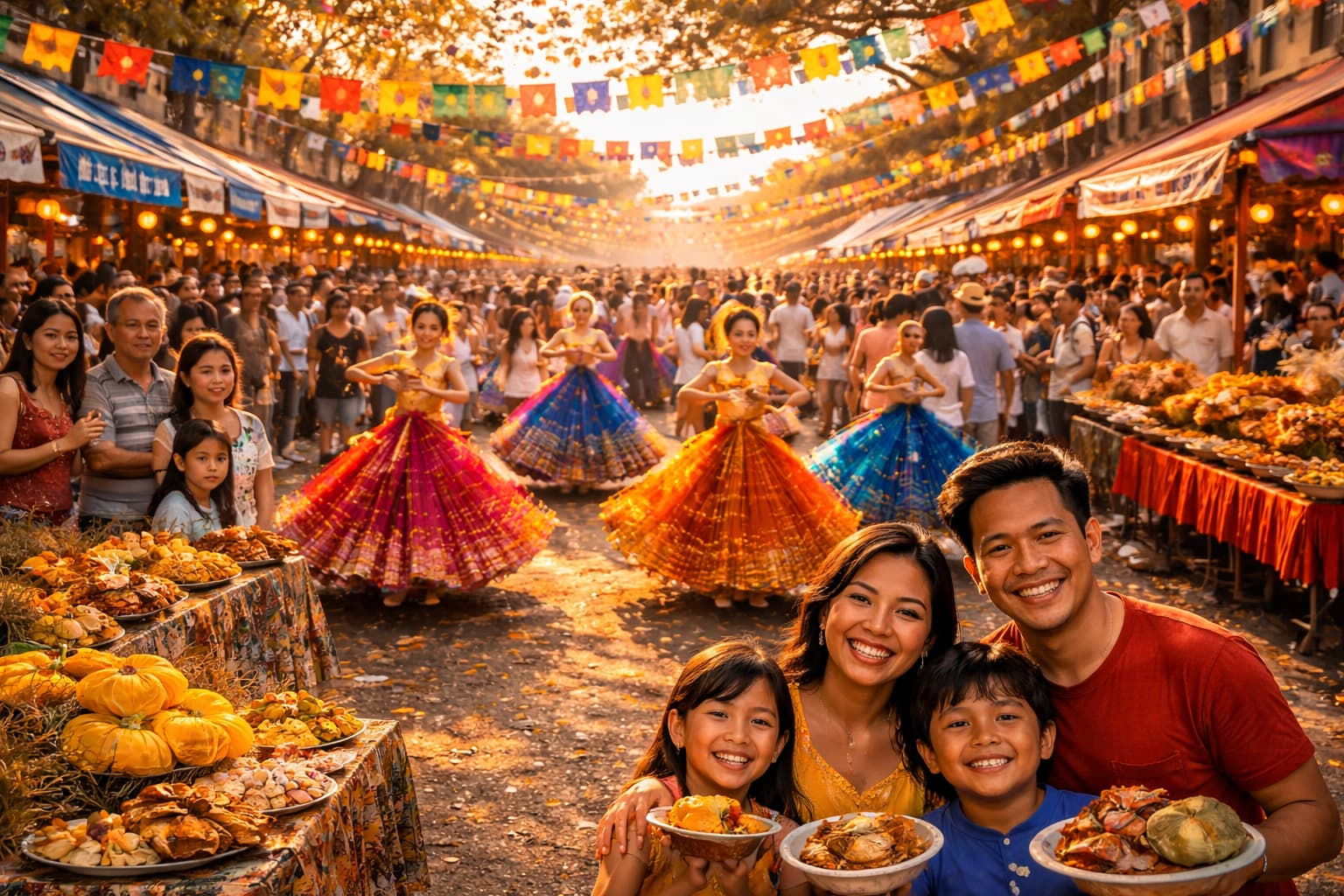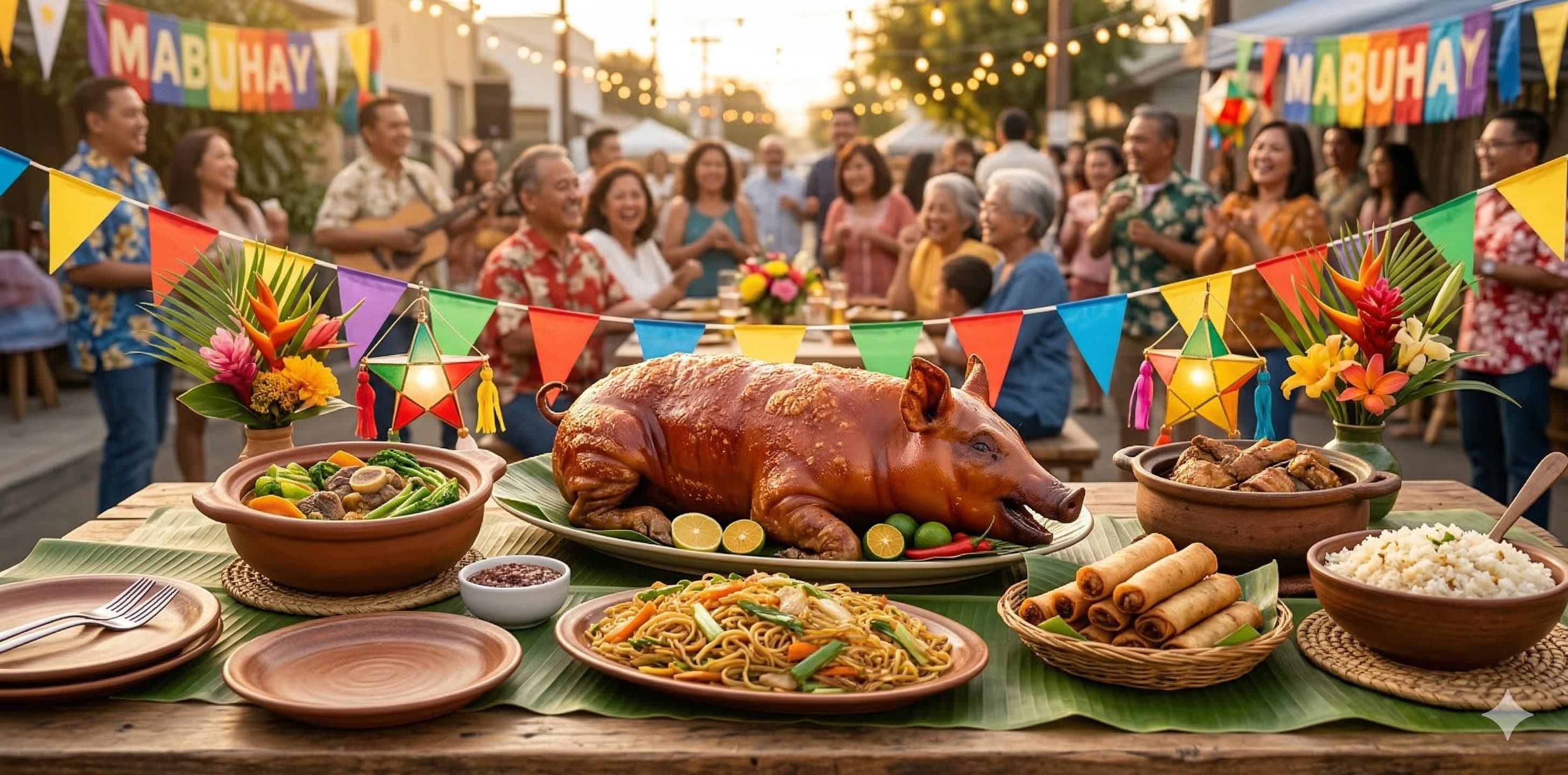
A Filipino barrio fiesta is unlike any other community celebration you've experienced. Part block party, part religious feast, part talent show, part family reunion — and completely, joyfully Filipino. If you're attending your first one, prepare to eat well, laugh often, and leave feeling like you've been welcomed into something real.
What is a barrio fiesta? In the Philippines, every town and barangay (neighborhood) celebrates an annual fiesta in honor of its patron saint. These fiestas have been transplanted to the United States by Filipino regional associations — organizations of Filipinos from the same Philippine province or town who gather in America to maintain their shared heritage. A barrio fiesta in the US might honor San Pedro Calungsod, the Sto. Niño, or Our Lady of Peñafrancia — the saint of the organizers' hometown back in the Philippines. You don't need to know the patron saint to enjoy the fiesta; the hospitality is for everyone.
The lechon is the centerpiece of every Filipino fiesta, and you should go directly to it. Lechon is whole roasted pig — skin crackling like glass, meat tender and fragrant with aromatics. The lechon de leche skin is considered a delicacy; get there early because the best pieces go fast. Alongside the lechon, expect a full spread: pancit (noodles for long life), kare-kare (oxtail stew with peanut sauce), adobo, lumpia, grilled meats, rice, and desserts — leche flan, biko, halo-halo, and more. Filipino hospitality demands abundance. You will not go hungry.
The entertainment at a barrio fiesta is multilayered. Folk dances are a staple: tinikling (the bamboo pole dance), cariñosa, singkil (the royal dance with fans and fans of Mindanao), and regional dances specific to the organizers' home province. These are performed by Filipino dance troupes who rehearse for months — watch the footwork in tinikling closely; it's extraordinary. The evening program often includes a beauty pageant (Reyna Elena, Miss Fiesta, or similar), live OPM performances, and a program of awards and community recognition.
The patron saint tradition gives a barrio fiesta its spiritual anchor. The event typically opens with a Solemn High Mass dedicated to the patron saint, followed by a procession of the saint's image through the venue or surrounding area. Even if you're not Catholic, this is worth witnessing — the combination of devotion and pageantry is uniquely Filipino. The blessing of the food and the formal opening of the fiesta program follow the Mass.
Practical tips for your first fiesta: Arrive hungry and bring cash (food stalls are usually cash-only). Dress in smart casual — it's not formal, but Filipinos tend to dress up for fiestas. If you're invited to sit at a family's table, accept; Filipino hospitality at a fiesta means you'll be fed until you can't move. Don't be surprised if strangers offer you food — this is normal and beautiful. Bring the kids; barrio fiestas are deeply family-oriented.
Finding a barrio fiesta near you: regional Filipino associations are the key. Search for "[Your Province] Association" (e.g., Ilocano Association, Cebuano Association, Bicolano Association) in your city, or browse our events directory under Festivals & Fiestas. Fiestas peak in summer — June through September — but happen year-round. Every one is different, shaped by the home province and personality of its organizers. Attend more than one; each will be a distinct and wonderful experience.